


The oak is one of the representatives of the emmer family, whose power and glorious beauty attracts everyone. It is not in vain that in scientific Latin it is called Quercus, which translates as "beautiful".
More than 600 species of oak grow on the globe, which are distributed in the zones of the northern hemisphere.
As an afforestation species, oak is the most common in Armenia. There are 5 types of oaks found naturally in nature: large, Georgian, long-stemmed, Araxian and golden oaks. Among the species of oak there are evergreens, however, the oaks of Armenia are deciduous trees. Among the Armenian oaks, the long-stemmed, araksian and golden oaks are extremely drought-resistant, but less common. Large and Georgian oaks are the most common, and Georgian oak is found at altitudes up to 1200 m. Altitudes of 1200-1400 m above sea level are a unique border zone for both species, in which the large oak begins and the Georgian oak ends. The large oak, as a forest-forming species, is the most common in Armenia, it creates different types of forest at altitudes up to 2600m.
Oak is long-lived, living 300-400 years, sometimes 1000, but older oak trees are also known.
Armenian Sparapet Vardan Mamikonian, after defeating the Persian army in the Battle of Khakhkhag in 450, on the way back home, planted an oak tree near Aknaghbyur village of Tavush as a sign of victory. The oak of Sparapet lived until 1978, more than 1500 years. The oak tree fell, and commander Hovhannes Baghramyan planted a new one next to the fallen oak tree.
More than 600 species of oak grow on the globe, which are distributed in the zones of the northern hemisphere.
As an afforestation species, oak is the most common in Armenia. There are 5 types of oaks found naturally in nature: large, Georgian, long-stemmed, Araxian and golden oaks. Among the species of oak there are evergreens, however, the oaks of Armenia are deciduous trees. Among the Armenian oaks, the long-stemmed, araksian and golden oaks are extremely drought-resistant, but less common. Large and Georgian oaks are the most common, and Georgian oak is found at altitudes up to 1200 m. Altitudes of 1200-1400 m above sea level are a unique border zone for both species, in which the large oak begins and the Georgian oak ends. The large oak, as a forest-forming species, is the most common in Armenia, it creates different types of forest at altitudes up to 2600m.
Oak is long-lived, living 300-400 years, sometimes 1000, but older oak trees are also known.
Armenian Sparapet Vardan Mamikonian, after defeating the Persian army in the Battle of Khakhkhag in 450, on the way back home, planted an oak tree near Aknaghbyur village of Tavush as a sign of victory. The oak of Sparapet lived until 1978, more than 1500 years. The oak tree fell, and commander Hovhannes Baghramyan planted a new one next to the fallen oak tree.
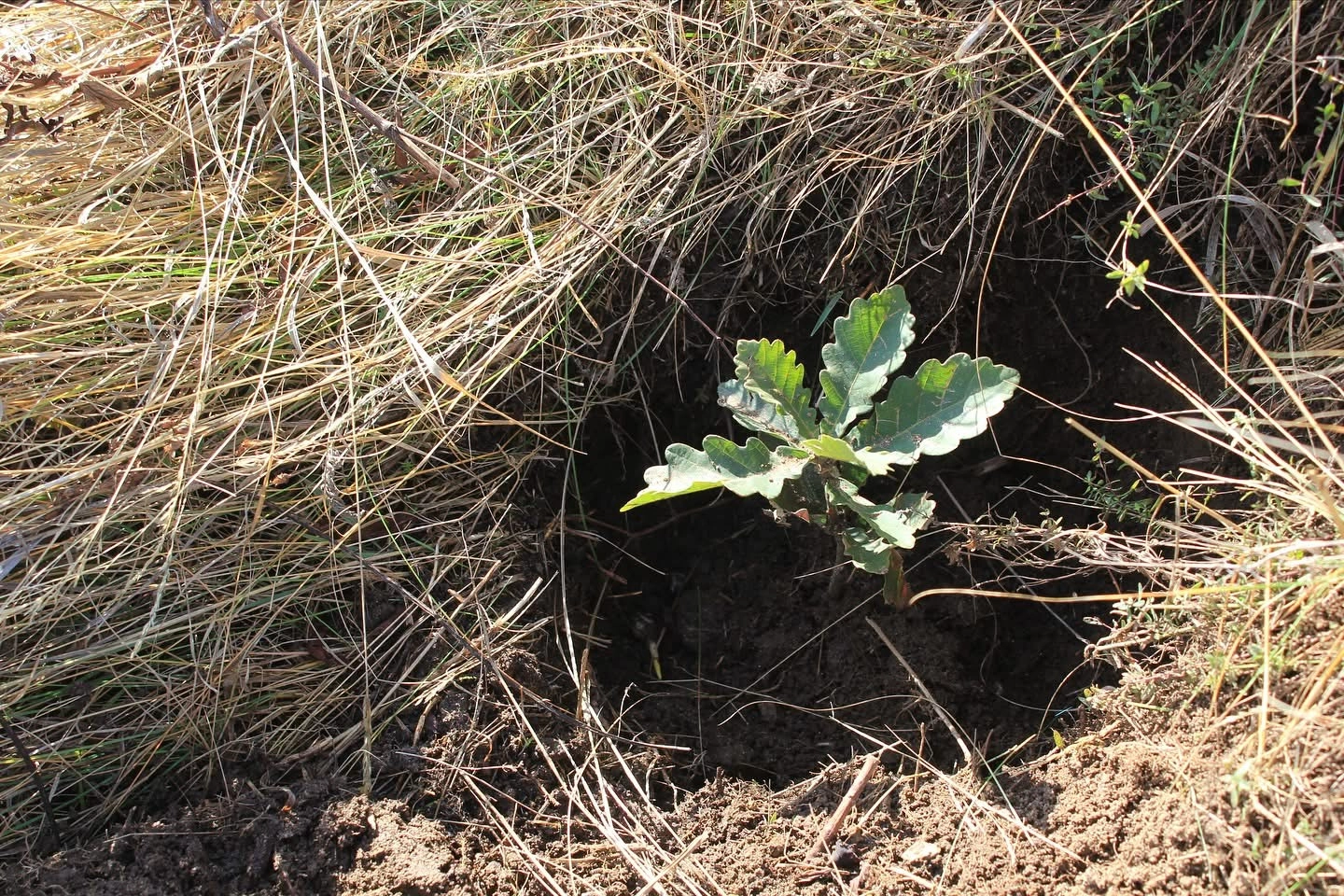
Oak grows slowly. At the age of 10, in its usual habitats in Armenia, the height of the oak reaches only 1 meter, but the root deepens by 1-1.5 meters during that period. During its life, the oak grows up to 30 meters, sometimes even 35 m, and the diameter of the trunk reaches up to 2 meters or more. Oak roots are powerful, axially large and go very deep into the soil.
Oak blooms in late spring as the leaves open. The leaves are serrated, dark green, firm, hard and leathery, often remaining on the branches all winter. The oak leaf is a symbol used in the heraldry of various countries.
Since the earliest relationship between man and oaks, a very strong symbolic image of oak has developed, in which oak is associated with longevity, stability, endurance, fertility, power, justice and honesty.
It is monoecious, like a beech tree. This means that both male and female flowers are present on the same tree. The males hang in the inflorescence and are called “katviks”, while the females look like a grain of wheat. The fruit, called an acorn, grows from the female flowers.
The fruits ripen in September-October. The top of the acorns is covered with a fruit cup, as if wearing a hat. Oak bears abundant fruit every 3-5 years. Up to 1200 kg of acorns can be collected from 1 hectare of oak forest.
The most productive oak stands are produced by seed propagation. However, the oak is able to reproduce also by stumps or scions, which appear abundantly after cutting the tree. one can often see how many new branches have grown from the side of the cut oak trunk. The ability to breed with native species preserves the oak tree until old age.
Oaks need light and drought-resistant, it is not afraid of strong frosts.
In addition oak wood is highly valuable. Objects or furniture made of oak is very strong and beautiful.
Oak blooms in late spring as the leaves open. The leaves are serrated, dark green, firm, hard and leathery, often remaining on the branches all winter. The oak leaf is a symbol used in the heraldry of various countries.
Since the earliest relationship between man and oaks, a very strong symbolic image of oak has developed, in which oak is associated with longevity, stability, endurance, fertility, power, justice and honesty.
It is monoecious, like a beech tree. This means that both male and female flowers are present on the same tree. The males hang in the inflorescence and are called “katviks”, while the females look like a grain of wheat. The fruit, called an acorn, grows from the female flowers.
The fruits ripen in September-October. The top of the acorns is covered with a fruit cup, as if wearing a hat. Oak bears abundant fruit every 3-5 years. Up to 1200 kg of acorns can be collected from 1 hectare of oak forest.
The most productive oak stands are produced by seed propagation. However, the oak is able to reproduce also by stumps or scions, which appear abundantly after cutting the tree. one can often see how many new branches have grown from the side of the cut oak trunk. The ability to breed with native species preserves the oak tree until old age.
Oaks need light and drought-resistant, it is not afraid of strong frosts.
In addition oak wood is highly valuable. Objects or furniture made of oak is very strong and beautiful.